Material research:
Earth
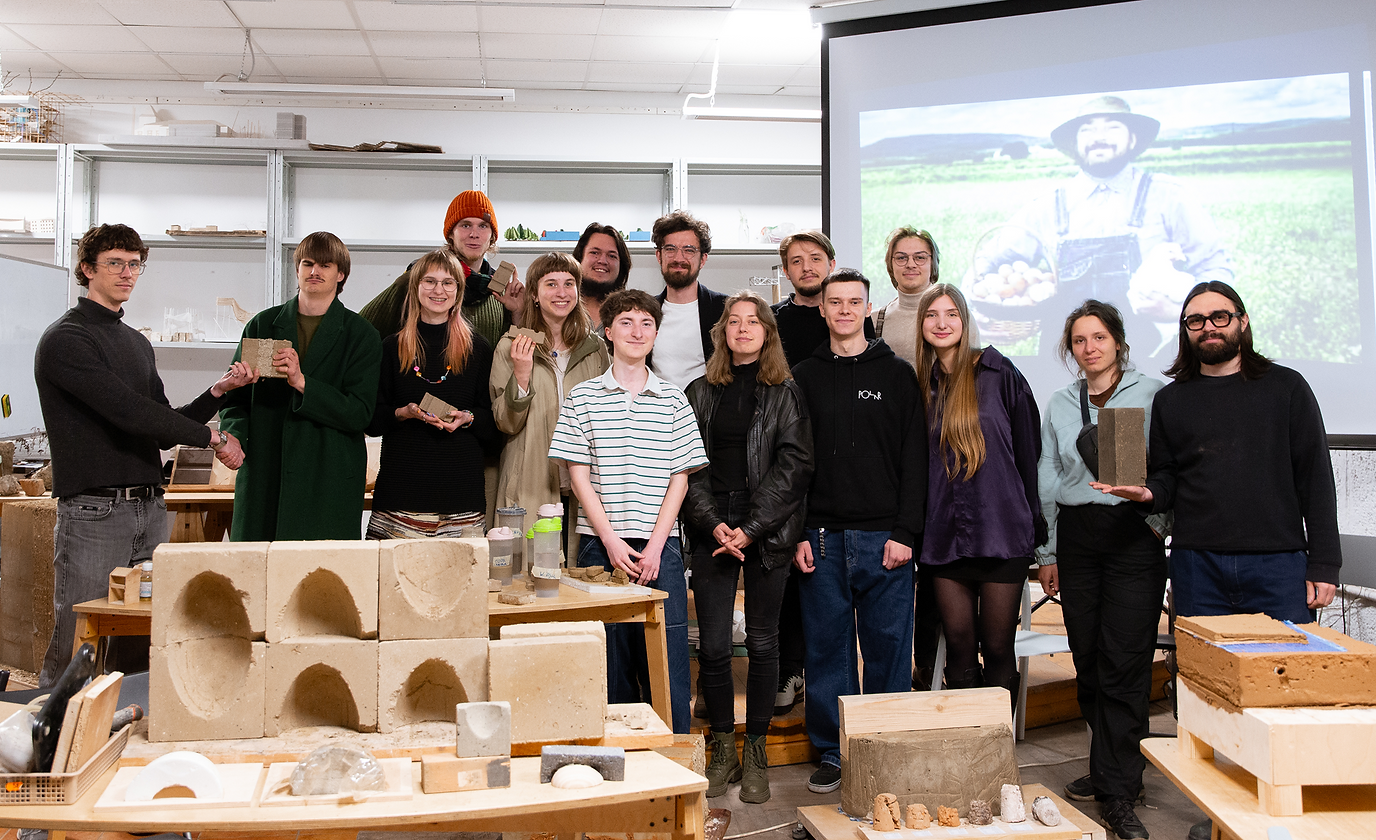
An elective course on materials research for students of the Kharkiv School of Architecture. The theme for the semester is soil.
Sustainable materials
Topic
Location
Lviv, Ukraine
January 2025 - May 2025
Duration
Mykhailo Shevchenko
Team

About the course
This course is the first in a series of courses on materials research. The course is based on studying the properties of the material and different types of earthen structures, as well as the technological features of their application. A systematic study of construction technologies results in the selection of one of the technologies and the development of research and a project based on it.
An additional focus of the course is working with soil which is contaminated by military contaminants. Students were asked to use the strategy of encapsulation contaminated material from the Grunt project, Experimental fellowship project at Bauhaus Earth.


Results
The result of the course is research into a eath-based construction and an architectural design project based on that research. Students created projects with the soil as thr main material adding sustainable or reused materials.
Collaborators
We are proud of our partners, thanks to whom our projects become reality.


See other projects
Education
Sustainable Materials and Structures
Sustainable Materials and Structures is an elective course at Kharkiv School of Architecture. The main topic of the course is a full cycle of the building materials production - from the extraction and processing of raw materials to the final product with all intermediate stages.
Construction
Pavilion
It is the Ukraine’s very first structure made of compressed earth blocks (CEB)! It is now standing in Lviv as a memorial to Rafał Lemkin, the lawyer who coined the term genocide. Materiality is the central symbol of the pavilion: built from local soil, it evokes a direct link to the city’s history and its tragedies. All materials were sourced within a 20-kilometer radius of Lviv, Ukraine.
Research
Grunt
“Grunt” investigates war-related soil pollution in Ukraine—while rethinking earth as a local material for climate-conscious reconstruction, Grunt bridges two critical concerns arising from post-war zones: the environmental consequences of warfare and the urgent need for reconstruction aligned with climate goals. Hence amplifying the critical question of benchmarks for harm and thus health—soil and human—in our built environments.